Gilnockie Tower: A Sixteenth-Century Scottish Tower House


Site at a Glance
- Rating
- 4.8
- Popularity
- Low
- Country
- United Kingdom
- Primary era
- Early Modern
- External website
- Open
- Eras represented
- Early Modern
- Civilizations
- Kingdom of Scotland
- Site type
- Military
- Remains
- Castle
On this page7 sections
History
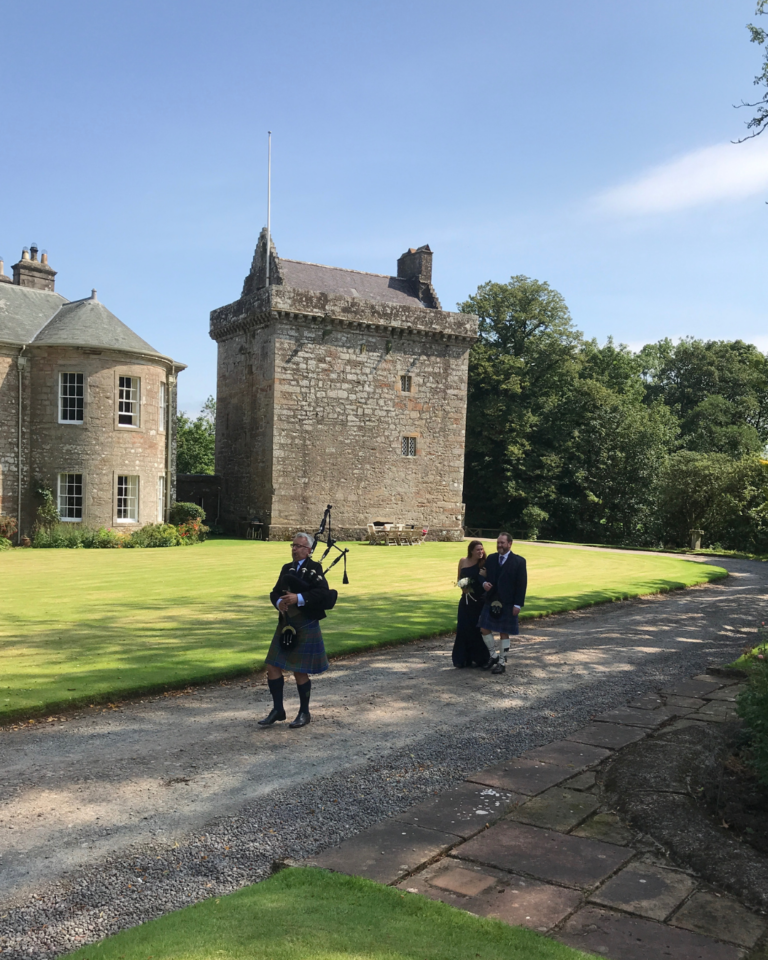
Gilnockie Tower is a sixteenth-century Scottish tower house at Hollows, north of Canonbie in the United Kingdom. Built around 1520 by Johnnie Armstrong, a prominent Border outlaw of Clan Armstrong, it stood on the west bank of the River Esk in the frontier region between Scotland and England. The building, originally known as Hollows Tower, combined domestic accommodation with defensive features suited to the unsettled political and military life of the sixteenth-century Border country.
Armstrong ownership and Border conflict
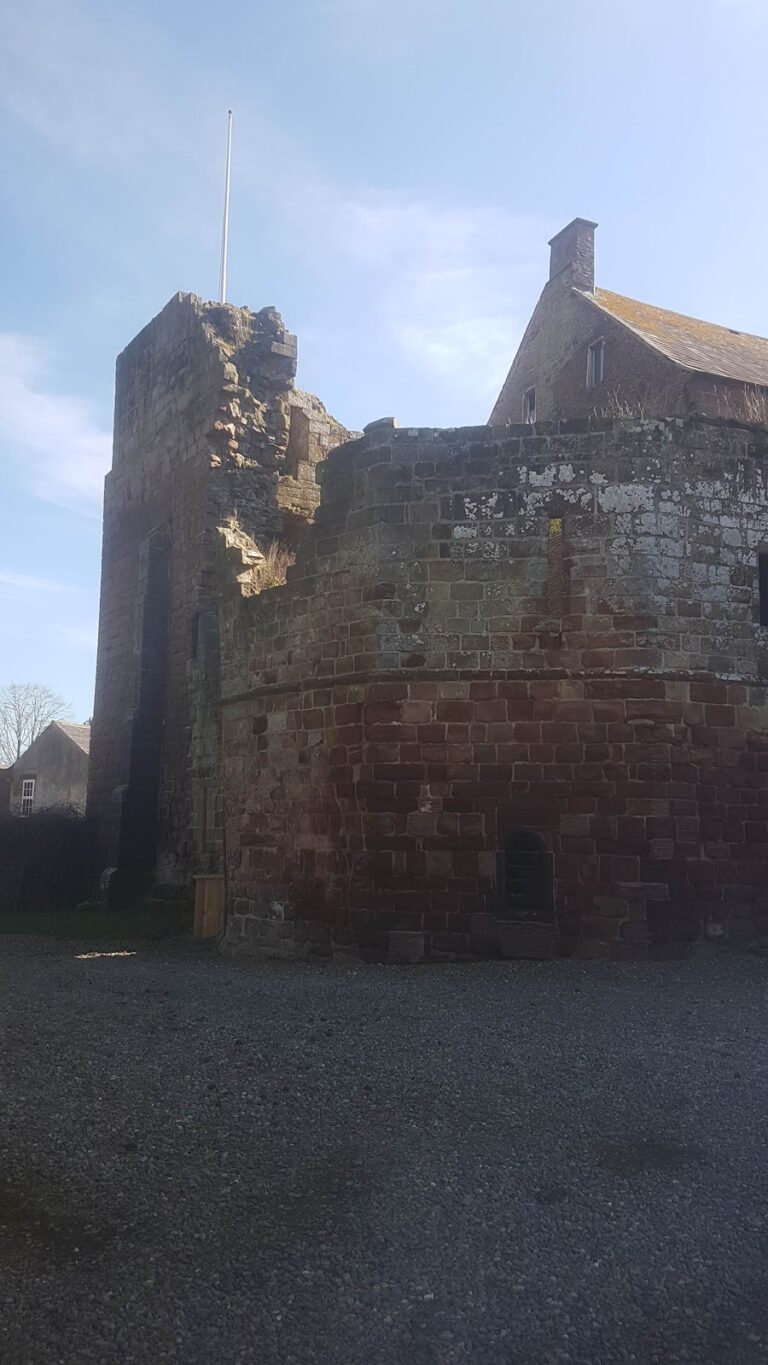
Johnnie Armstrong was the younger brother of Thomas Armstrong of Mangerton. In 1528, Sir Christopher Dacre, the English Warden of the Western Marches, burned the tower. It was rebuilt after the fire and suffered further damage during English raids in the 1540s. Later work included the addition or alteration of a parapet walk and a beacon stance on the south gable.
The tower is also associated with the death of its builder. In 1530, James V of Scotland tricked Johnnie Armstrong and about 50 of his followers into joining a hunting party, after which they were hanged. The event is commemorated in the ballad “Johnnie Armstrong.”
Restoration and museum use
By 1978, Gilnockie Tower was a roofless ruin. Major T. C. R. Armstrong-Wilson acquired it that year and began a full restoration. The roof was renewed, the floors were reconstructed, and the building was made habitable in 1979–80.
Further major repairs began in January 2015 and were completed in 2018. The work sought to return the building as closely as possible to its sixteenth-century appearance while meeting modern visitor-safety requirements. The Clan Armstrong Centre, a Scottish registered charity, owns and manages the tower. It now contains the Clan Armstrong Museum, previously located in the Episcopal Church at Langholm, with displays of Clan Armstrong artefacts and a section devoted to Neil Armstrong.
Gilnockie Tower has been a Category A listed building since 3 August 1971. This is Scotland’s highest level of statutory protection for buildings of special architectural or historic interest. Restoration work was undertaken in consultation with the Scottish authorities responsible for ancient monuments.
Remains
The tower house
Gilnockie Tower is a simple, oblong-plan structure built of cream sandstone rubble. It stands on a rise beside the River Esk and measures approximately 10 by 7.6 metres at its base, with another recorded measurement of about 10.2 metres from north to south by 7.7 metres from east to west. The four-storey tower also has an attic between crow-stepped gables, and its entrance is on the west side.
The basement contains a vaulted cellar with gun loops, or embrasures, directed towards the south, west, and north. A spiral stair in the south-west corner rises from the basement to the first-floor hall. Two further rooms occupy the upper levels. The restored interior includes a furnished Grand Hall and Master Bedroom, reconstructed floors at four levels, authentic oak doors, plastered surfaces, water, and electricity.
Corbels at the top of the walls indicate that the tower formerly carried a parapet walk. The walkway was sympathetically upgraded with a safety fence during the repairs of 2015–18. A beacon stance projects from the south gable at the building’s highest point. The tower reaches about 38 feet, or 11.5 metres, to the parapet and 44 feet, or 13.4 metres, to the beacon. A beacon stance was a projecting platform or structure used to support a signal fire.
Reused carved stone
A large stone beside the basement doorway is thought to be the oldest element incorporated into the tower. Its spiral carvings and key-like symbol are believed to date from the second millennium BC, and the stone was reused in the later building.
Nearby earthwork
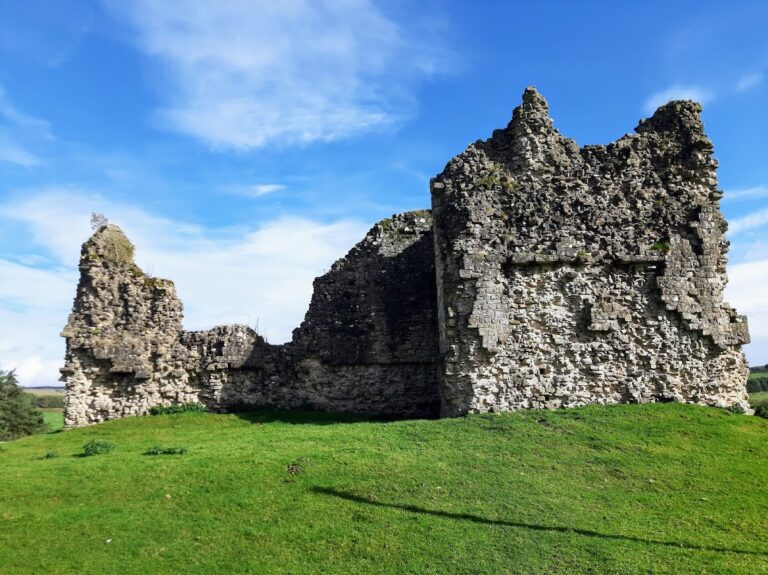
A separate site called Gilnockie Castle lies near the eastern end of Gilnockie Bridge, about 500 metres southeast of the tower. Only an earthwork survives there. It is uncertain whether a tower stood on that site, which may instead have been the location of an earlier tower destroyed in the early sixteenth century. A possible courtyard has also been associated with Gilnockie Tower, although its existence remains uncertain.
Nearby sites